
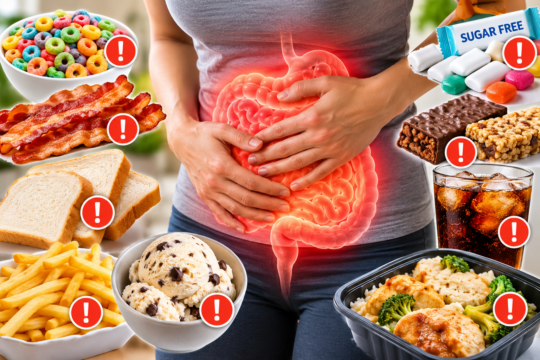
You might be eating foods every single day that leave your stomach feeling bloated, uncomfortable, or unpredictable without realizing what’s behind the problem. Some of the biggest culprits are hiding in ordinary breakfasts, convenient lunches, afternoon snacks, and even foods marketed as healthy. And while these foods aren’t necessarily harmful to everyone, certain ingredients can make digestive symptoms worse, especially if you already have a sensitive stomach.
Your digestive system does much more than process meals. It helps absorb nutrients, supports immune function, and houses trillions of microorganisms collectively known as the gut microbiome.
What you eat can influence those microorganisms and how comfortably your digestive system functions. Here are nine everyday foods worth examining, why they sometimes cause trouble, and what you can eat instead.
1. Sugary Breakfast Cereals

That colorful box of cereal might seem like a convenient way to start your morning, but some popular varieties contain surprisingly large amounts of added sugar and very little fiber.
Regularly eating a diet high in added sugars and low in fiber can crowd out foods that support a diverse gut microbiome. Fiber is particularly important because certain beneficial intestinal bacteria use it as fuel, producing compounds called short-chain fatty acids that help maintain the intestinal lining.
The problem isn’t that an occasional bowl of sweet cereal destroys healthy bacteria. It’s that a breakfast built primarily around refined grains and sugar may provide little of the nourishment your digestive system needs.
What to eat instead: Choose oatmeal, shredded wheat, or a whole-grain cereal with at least 3 grams of fiber per serving. Add strawberries, blueberries, or sliced bananas for natural sweetness and additional fiber.
Something to watch: Cereals labeled “multigrain” or “made with whole grains” aren’t automatically high in fiber or low in added sugar. Check the nutrition label.
2. Heavily Processed Meats

Bacon with breakfast, a hot dog at lunch, or sliced deli meat in a sandwich can make processed meats a regular part of your diet without much thought.
Processed meats are typically preserved through smoking, curing, salting, or the addition of preservatives. They can also contain substantial amounts of sodium and saturated fat.
Research suggests that dietary patterns high in processed meat may be associated with changes in gut microbial composition. However, scientists are still investigating which changes are harmful and how much processed meat contributes independently of the rest of a person’s diet.
There is another reason to limit these foods. The World Health Organization’s International Agency for Research on Cancer classifies processed meat as carcinogenic to humans, based on convincing evidence linking consumption to colorectal cancer.
That doesn’t mean eating bacon once will cause cancer. It means regularly eating processed meat increases long-term risk.
What to eat instead: Try freshly cooked chicken, turkey, eggs, fish, or beans. For sandwiches, leftover roasted chicken provides a convenient alternative to heavily processed deli meats.
3. Sugar-Free Candy and Gum
Here’s one that surprises many people: foods advertised as sugar-free can sometimes cause more immediate digestive discomfort than their regular counterparts.

Many sugar-free candies, gums, protein bars, and desserts contain sugar alcohols such as sorbitol, maltitol, mannitol, or xylitol.
These sweeteners are not always completely absorbed in the small intestine. When they reach the colon, intestinal bacteria can ferment them, producing gas. Some also draw water into the intestines, potentially causing loose stools or diarrhea.
People with irritable bowel syndrome, commonly called IBS, may be particularly sensitive to these ingredients.
The amount matters. Chewing one piece of sugar-free gum might cause no problems, while eating several servings of sugar-free candy could leave you feeling miserable.
What to eat instead: Choose naturally sweet fruit or small portions of regular treats if you tolerate them. If you prefer sugar-free products, read ingredient labels and pay attention to your individual tolerance.
Important distinction: Not all low-calorie sweeteners are sugar alcohols, and they do not all have the same digestive effects.
4. White Bread and Other Refined Grains
White sandwich bread, refined crackers, and many packaged baked goods are staples in American kitchens. They’re affordable, convenient, and easy to eat.
Unfortunately, refining grains removes much of their naturally occurring bran and germ, reducing the amount of fiber they contain.
Fiber helps support regular bowel movements and provides nourishment for beneficial gut bacteria. When a person’s diet relies heavily on refined grains without enough fiber-rich foods, constipation and reduced stool bulk may become problems.
It’s important to understand that white bread itself isn’t inherently damaging to the digestive tract. The concern is what happens when low-fiber foods consistently replace whole grains, vegetables, fruits, and legumes.
What to eat instead: Try whole-wheat bread, oats, barley, brown rice, or other whole grains. Look for bread that lists whole wheat as its first ingredient.
If you’re accustomed to a low-fiber diet, increase your intake gradually. Adding too much fiber overnight can actually make bloating and gas worse.
5. Fried Foods
French fries, fried chicken, onion rings, and other crispy favorites can be delicious, but large portions may leave your digestive system working overtime.
Fat slows stomach emptying, which can contribute to prolonged fullness, nausea, or upper abdominal discomfort in susceptible people. Fried and high-fat foods may also trigger symptoms in individuals with acid reflux or functional digestive disorders.
For people with certain gallbladder or pancreatic conditions, fatty meals can be especially troublesome.
Researchers are also studying how diets high in certain fats influence gut bacteria and intestinal inflammation. However, the evidence does not establish that every fried food directly harms the microbiome.
What to eat instead: Try oven-roasted potatoes, air-fried chicken, grilled fish, or baked vegetables with olive oil.
You can still enjoy crispy textures without deep-frying everything. Roasting potatoes at a high temperature, for example, creates browned edges while requiring substantially less oil.
6. Ice Cream and Other Dairy Desserts
A bowl of ice cream after dinner seems harmless enough. But if you frequently experience gas, bloating, cramps, or diarrhea afterward, lactose could be the reason.
Lactose is the natural sugar found in milk and many dairy products. Your small intestine uses an enzyme called lactase to break it down.
People who don’t produce enough lactase may have difficulty digesting lactose. When undigested lactose reaches the colon, bacteria ferment it, producing gas and other uncomfortable symptoms.
Lactose intolerance becomes more common with age in many populations, although it can occur at almost any age.
Not everyone with lactose intolerance needs to eliminate all dairy. Some people tolerate small portions, hard cheeses, or yogurt containing live cultures.
What to eat instead: Try lactose-free milk, lactose-free ice cream, or dairy-free frozen desserts. Lactase enzyme products may also help some people enjoy dairy more comfortably.
If dairy consistently causes symptoms, consider discussing lactose intolerance with a healthcare professional rather than assuming all digestive discomfort comes from the microbiome.
7. Protein Bars and Packaged “Health” Snacks
Some of the most surprising digestive triggers are foods marketed specifically to health-conscious shoppers.
Protein bars, low-carb cookies, meal replacement snacks, and high-fiber brownies often contain concentrated ingredients that can be difficult for sensitive digestive systems to tolerate.
Common examples include chicory root fiber, inulin, certain sugar alcohols, and large amounts of added isolated fiber.
Inulin is a fermentable fiber that can support beneficial intestinal bacteria. That sounds positive, and for many people it is. But rapid fermentation can also produce substantial gas and bloating, especially in people with IBS.
Some products combine several fermentable ingredients in a single serving, making digestive symptoms more likely.
What to eat instead: Choose simpler snacks such as nuts, fruit, oatmeal, eggs, or plain yogurt if tolerated.
Check the label: If a protein bar leaves you bloated, look for ingredients such as chicory root, inulin, sorbitol, maltitol, or large amounts of added fiber.
8. Soda and Other Carbonated Drinks
That afternoon soda might be contributing to your bloating before you’ve even finished drinking it.
Carbonated beverages contain dissolved carbon dioxide. When released in the digestive tract, that gas can increase belching and create a sensation of fullness or abdominal pressure.
Regular soda also contains added sugar, while certain diet beverages contain sweeteners that some people find difficult to tolerate.
However, carbonated water and sugary soda should not be treated as nutritionally identical. Plain sparkling water contains no added sugar and is generally a reasonable hydration choice for people who tolerate carbonation.
For individuals with reflux, frequent belching, or significant bloating, reducing carbonated beverages may improve comfort.
What to drink instead: Try still water, unsweetened tea, or water flavored with cucumber or fresh berries.
If you enjoy sparkling water and experience no symptoms, there is usually no reason to avoid it solely out of concern for your gut bacteria.
9. Ultra-Processed Packaged Foods
Frozen meals, packaged pastries, snack cakes, instant noodles, and many ready-to-eat convenience foods can make up a substantial portion of a person’s daily calories.
Ultra-processed foods vary considerably in nutritional quality, so the category itself doesn’t tell the entire story.
Still, diets dominated by these products are often higher in sodium, added sugar, and refined starches while being lower in fiber and minimally processed plant foods.
Scientists are investigating whether certain food additives, including some emulsifiers, influence intestinal mucus, gut bacteria, or inflammation. Laboratory and animal studies have raised questions, but evidence about the effects of individual additives in humans remains limited.
The strongest practical concern is the overall dietary pattern. Eating mostly packaged convenience foods can leave little room for vegetables, legumes, fruits, and whole grains that help support digestive health.
What to eat instead: Build more meals around recognizable ingredients such as beans, vegetables, potatoes, eggs, chicken, fish, and whole grains.
Convenience foods aren’t automatically unhealthy. Frozen vegetables, canned beans, and plain frozen fish can make nutritious meals easier to prepare.