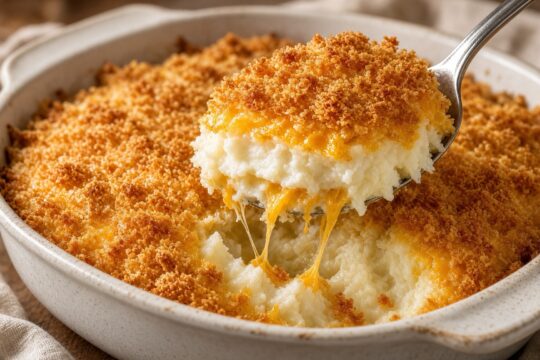
Thanksgiving Mashed Potato Casserole takes classic homemade mashed potatoes and turns them into a rich, buttery holiday side dish with roasted garlic, nutty brown butter, sour cream, and plenty of melted cheese.
The potatoes are whipped until creamy and fluffy, then spread into a baking dish and topped with Parmesan, sharp cheddar, and a buttery golden breadcrumb topping. After baking, the casserole develops a beautifully crisp, golden-brown crust while the inside stays soft, smooth, and incredibly creamy. Every spoonful delivers the comforting flavor of traditional mashed potatoes with an extra layer of buttery, cheesy goodness.
This easy make-ahead casserole is perfect for Thanksgiving dinner, Christmas gatherings, Sunday suppers, and family potlucks. Browning the butter adds a deep, toasted flavor that makes the potatoes taste especially rich, while roasted garlic provides a mellow sweetness without overpowering the dish. The casserole can be assembled ahead of time and refrigerated until you’re ready to bake, freeing up valuable stovetop space during a busy holiday meal.
Serve it alongside roasted turkey, glazed ham, stuffing, and plenty of gravy. With its golden, crispy topping and creamy potato filling, this Thanksgiving Mashed Potato Casserole might become the most requested side dish on the holiday table.
Prep Time: 25 minutes
Cook Time: 1 hour 15 minutes
Total Time: 1 hour 40 minutes
Servings: 10-12
Yield: 1 (9×13-inch) casserole
Ingredients
For the Mashed Potatoes
- 4 pounds Yukon Gold potatoes, peeled and cut into 2-inch chunks
- 1 whole head garlic
- 1 teaspoon olive oil
- 3/4 cup unsalted butter, divided
- 3/4 cup whole milk, warmed
- 1/2 cup heavy cream, warmed
- 3/4 cup sour cream, room temperature
- 4 ounces cream cheese, softened
- 1 cup freshly grated sharp cheddar cheese
- 1/2 cup freshly grated Parmesan cheese
- 1 1/2 teaspoons kosher salt, plus more for boiling water
- 1 teaspoon freshly ground black pepper
- 1/2 teaspoon onion powder
For the Golden Parmesan Topping
- 3/4 cup panko breadcrumbs
- 1/2 cup freshly grated Parmesan cheese
- 1/2 cup shredded sharp cheddar cheese
- 3 tablespoons unsalted butter, melted
- 1/2 teaspoon garlic powder
- 1/4 teaspoon smoked paprika (optional)
- 1 tablespoon finely chopped fresh chives (optional)
Directions
- Preheat the oven: Preheat your oven to 400°F. Lightly grease a 9×13-inch baking dish with butter or nonstick cooking spray. Set aside.
- Prepare the garlic: Remove the loose outer layers of papery skin from the garlic head, keeping the cloves attached. Slice approximately 1/4 inch from the top to expose the cloves. Place the garlic on a piece of aluminum foil, drizzle with olive oil, and wrap loosely.
- Roast the garlic: Place the wrapped garlic in the oven and roast for 35 to 40 minutes, until the cloves are golden, soft, and easily mashed with a fork. Remove from the oven and allow to cool slightly.
- Prepare the potatoes: While the garlic roasts, peel the Yukon Gold potatoes and cut them into evenly sized 2-inch chunks. Place them in a large stockpot and cover with cold water by approximately 1 inch.
- Boil the potatoes: Add a generous pinch of salt to the water and bring to a boil over high heat. Reduce to a gentle boil and cook for approximately 15 to 20 minutes, until the potatoes are completely tender and a fork slides easily through the center.
- Drain thoroughly: Drain the cooked potatoes in a large colander. Return them to the warm pot over low heat for 1 to 2 minutes, stirring gently to allow excess moisture to evaporate. Remove from the heat.
- Brown the butter: While the potatoes cook, place 1/2 cup of the unsalted butter in a light-colored saucepan over medium heat. Allow it to melt, stirring occasionally. Continue cooking for approximately 4 to 6 minutes, until the butter foams and the milk solids turn golden brown with a toasted, nutty aroma.
- Remove from heat: As soon as the butter develops a deep golden color and smells nutty, remove the saucepan from the heat. Carefully transfer the browned butter, including the toasted milk solids, to a heatproof bowl to prevent further cooking.
- Prepare the roasted garlic: Once the garlic is cool enough to handle, gently squeeze the softened cloves from their skins into a small bowl. Mash them into a smooth paste using a fork.
- Warm the dairy: Combine the whole milk and heavy cream in a small saucepan over low heat. Warm until steaming but not boiling. Add the remaining 1/4 cup butter and stir until melted.
- Mash the potatoes: Using a potato masher or potato ricer, mash the drained potatoes until smooth and free of large lumps. Avoid using a food processor or blender, which can make mashed potatoes gluey.
- Add the brown butter: Pour the browned butter over the mashed potatoes, reserving approximately 1 tablespoon for drizzling over the casserole before baking. Gently fold until evenly incorporated.
- Add the roasted garlic: Stir the roasted garlic paste into the mashed potatoes, distributing it evenly throughout the mixture.
- Incorporate the warm dairy: Gradually add the warm milk and cream mixture, folding gently with a large spoon or spatula. Continue mixing until the potatoes become smooth, fluffy, and creamy.
- Add the sour cream and cream cheese: Fold in the sour cream and softened cream cheese. Stir gently until the mixture is smooth and the cream cheese is completely incorporated.
- Add the cheese: Stir in 1 cup shredded sharp cheddar cheese and 1/2 cup grated Parmesan cheese. Mix just until the cheese is evenly distributed throughout the warm potatoes.
- Season the potatoes: Add the kosher salt, black pepper, and onion powder. Taste and adjust the seasoning as needed. The potatoes should be slightly more flavorful than ordinary mashed potatoes because the baking process will mellow the seasoning.
- Transfer to the baking dish: Spoon the mashed potato mixture into the prepared 9×13-inch baking dish. Spread evenly with a spatula, creating a thick, smooth layer.
- Create texture on top: Use the back of a spoon to create shallow swirls and ridges across the surface of the potatoes. These ridges will help create lightly browned edges beneath the topping.
- Prepare the breadcrumb topping: In a medium mixing bowl, combine the panko breadcrumbs, grated Parmesan cheese, shredded cheddar cheese, melted butter, garlic powder, and optional smoked paprika. Stir until the breadcrumbs are evenly coated with butter.
- Add the topping: Sprinkle the breadcrumb mixture evenly over the mashed potatoes, covering the surface from edge to edge. Avoid pressing the topping down too firmly.
- Finish with brown butter: Drizzle the reserved tablespoon of browned butter over the breadcrumb topping for additional toasted flavor.
- Bake the casserole: Place the baking dish in the preheated 400°F oven and bake uncovered for approximately 20 to 25 minutes, until the casserole is heated through, the cheese is melted, and the topping becomes golden brown and crisp.
- Brown the topping: If the topping needs additional color, switch the oven to broil and cook for 1 to 2 minutes, watching carefully to prevent burning. The breadcrumbs should develop a deep golden color with lightly toasted edges.
- Rest before serving: Remove the casserole from the oven and allow it to rest for approximately 5 to 10 minutes. This helps the potatoes settle and makes serving easier.
- Optional garnish: If desired, sprinkle a small amount of finely chopped fresh chives over the casserole immediately before serving.
- Serve: Spoon generous portions of Thanksgiving Mashed Potato Casserole onto warm dinner plates, making sure each serving includes a thick layer of creamy mashed potatoes and plenty of golden Parmesan topping.
- Enjoy: Serve warm alongside roasted turkey, holiday ham, homemade stuffing, green bean casserole, or your favorite Thanksgiving gravy.
Chefs Notes
- Why Yukon Gold potatoes work best: Yukon Gold potatoes have a naturally buttery flavor and creamy texture, making them ideal for rich mashed potato casseroles. They also hold their texture well during baking.
- Russet potato substitution: Russet potatoes can be substituted for Yukon Gold potatoes. They produce a lighter, fluffier texture but may require slightly more milk or cream to achieve the same consistency.
- For the best texture: Use a potato ricer or traditional hand masher. Avoid food processors, blenders, and excessive electric mixing, which can release too much starch and make the potatoes gummy.
- Drain the potatoes thoroughly: Excess water can make mashed potatoes loose and watery. Returning the drained potatoes to the warm pot briefly helps evaporate moisture before adding the butter and cream.
- Why brown butter makes a difference: Browning butter gently toasts the milk solids, producing a deep, nutty flavor that adds richness to the mashed potatoes without requiring additional ingredients.
- Watch the butter carefully: Butter can change from golden brown to burnt very quickly. Remove it from the heat as soon as the milk solids turn amber and develop a toasted aroma.
- Use a light-colored saucepan: A stainless steel or light-colored saucepan makes it easier to monitor the color of the butter as it browns.
- Don’t discard the browned bits: The toasted milk solids at the bottom of the saucepan contain much of the brown butter’s flavor. Include them when adding the butter to the potatoes.
- Roasting garlic creates a sweeter flavor: Roasted garlic becomes mellow, buttery, and slightly sweet. It provides a more balanced garlic flavor than raw minced garlic.
- For stronger garlic flavor: Add 1/2 teaspoon garlic powder or 1 additional roasted garlic head to the mashed potatoes.
- Warm the milk and cream: Adding warm dairy helps the potatoes absorb the liquid more evenly and keeps the mixture smooth and fluffy.
- Use full-fat dairy: Whole milk, heavy cream, sour cream, and cream cheese create a rich, creamy texture that holds up well during baking. Lower-fat substitutes may produce a thinner or less flavorful casserole.
- Why cream cheese is included: Cream cheese adds body and richness, helping the mashed potatoes remain creamy even after reheating.
- Why sour cream is included: Sour cream adds a subtle tang that balances the richness of the butter and cheese.
- Use freshly grated cheese: Freshly grated cheddar and Parmesan melt more smoothly than many packaged shredded cheeses, which may contain anti-caking ingredients.
- Cheddar options: Sharp cheddar provides a stronger flavor, but mild cheddar, white cheddar, or Gruyere can also be used.
- For a more traditional Thanksgiving flavor: Replace 1/2 cup of the cheddar with shredded Gruyere for a slightly nutty, savory flavor that pairs especially well with roasted turkey.
- For extra cheesy potatoes: Increase the cheddar in the mashed potatoes to 1 1/2 cups. The casserole will become richer and slightly more dense.
- For a crispier topping: Increase the panko breadcrumbs to 1 cup and add an additional tablespoon of melted butter.
- For a softer topping: Omit the breadcrumbs and use only shredded cheddar and grated Parmesan. The casserole will develop a melted, lightly browned cheese crust instead of a crunchy topping.
- For a bacon variation: Fold 1/2 cup cooked, crumbled bacon into the mashed potatoes before baking. The smoky flavor complements the brown butter and roasted garlic.
- For a loaded potato variation: Add 1/2 cup cooked bacon, 1/4 cup chopped chives, and an additional 1/2 cup cheddar cheese to the mashed potatoes before baking.
- For a holiday herb variation: Add 1 teaspoon finely chopped fresh rosemary or thyme to the mashed potatoes for a savory flavor that pairs well with Thanksgiving turkey and gravy.
- Make-ahead instructions: Prepare the mashed potato mixture and spread it into the baking dish up to 24 hours in advance. Cover tightly and refrigerate. Store the breadcrumb topping separately so it stays crisp. Before baking, add the topping and allow the casserole to sit at room temperature for approximately 20 minutes while the oven preheats.
- Baking from refrigerated: If the casserole has been refrigerated, cover it with foil and bake at 350°F for approximately 30 to 40 minutes, then uncover, increase the temperature to 400°F, and bake for another 10 to 15 minutes until the topping is golden and the center reaches 165°F.
- Freezing instructions: Assemble the casserole without the breadcrumb topping, cool completely, and wrap tightly. Freeze for up to 2 months for the best quality. Thaw overnight in the refrigerator, add the fresh breadcrumb topping, and bake until thoroughly heated. The texture may be slightly less smooth after freezing.
- Storage: Refrigerate leftover casserole in an airtight container within 2 hours of serving. Store for up to 3 to 4 days.
- Reheating leftovers: Place leftover portions in an oven-safe dish, add a small splash of milk or cream if needed, and cover loosely with foil. Reheat at 325°F until hot throughout, reaching 165°F. Remove the foil for the last few minutes to restore some crispness to the topping.
- Serving with gravy: This casserole is delicious with traditional turkey gravy, but serve the gravy on the side so the crispy Parmesan topping remains crunchy.
- Best holiday pairing: Serve alongside roast turkey, glazed ham, cornbread dressing, cranberry sauce, green bean casserole, and warm dinner rolls.
- Presentation suggestion: Serve Thanksgiving Mashed Potato Casserole in a rustic ivory ceramic baking dish with a deeply golden, crispy Parmesan breadcrumb topping. Show a large silver serving spoon lifting a generous portion from the front corner, revealing thick, fluffy, creamy mashed potatoes beneath the crisp golden crust. The lifted spoonful should display a substantial amount of buttery potato filling with a few strands of melted cheese and visible toasted breadcrumb pieces. Use warm natural lighting, a shallow depth of field, and a close-up landscape composition. Keep the background simple, with a softly blurred holiday table setting. Avoid parsley or unnecessary green garnishes so the golden crust and creamy potato filling remain the main focus.