
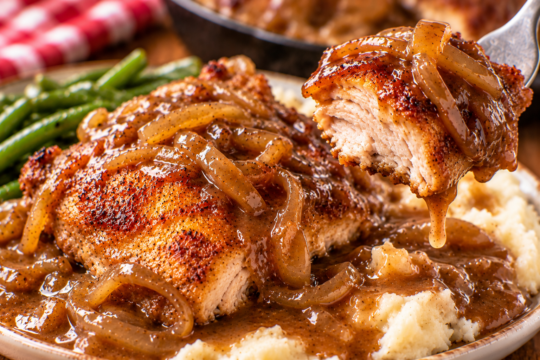
Chicken After Church is the kind of old-fashioned Sunday supper that tastes like it spent all afternoon simmering on the stove.
Juicy, deeply browned chicken thighs are smothered with tender caramelized onions and a rich homemade brown gravy that’s made right in the same skillet.
The onions cook down until sweet and golden before chicken broth and savory seasonings transform the pan drippings into a silky gravy.
Serve the chicken over buttery mashed potatoes with plenty of onion gravy spooned over everything for an easy comfort-food dinner worthy of its name.
Prep Time: 15 minutes
Cook Time: 45 minutes
Total Time: 1 hour
Servings: 6
Ingredients
For the Chicken
- 6 bone-in, skin-on chicken thighs
- 1 1/2 teaspoons salt
- 1 teaspoon black pepper
- 1 teaspoon garlic powder
- 1 teaspoon onion powder
- 1 teaspoon smoked paprika
- 2 tablespoons all-purpose flour
- 2 tablespoons vegetable oil
For the Onion Gravy
- 2 tablespoons butter
- 2 large yellow onions, thinly sliced
- 2 cloves garlic, minced
- 3 tablespoons all-purpose flour
- 2 1/2 cups chicken broth
- 1 teaspoon Worcestershire sauce
- 1/2 teaspoon onion powder
- 1/2 teaspoon garlic powder
- 1/2 teaspoon dried thyme
- 1/2 teaspoon black pepper
- 1/4 cup heavy cream
- Salt, to taste
Directions
- Pat the chicken thighs thoroughly dry with paper towels. Season both sides with the salt, black pepper, garlic powder, onion powder, and smoked paprika.
- Lightly dust the seasoned chicken with 2 tablespoons of flour. Shake away any excess. This helps the chicken develop a deeply browned exterior and contributes additional flavor to the gravy.
- Heat the vegetable oil in a large cast-iron or heavy-bottomed skillet over medium-high heat.
- Place the chicken thighs skin-side down in the hot skillet. Cook without moving them for 6 to 8 minutes, or until the skin becomes deeply golden brown and crisp.
- Turn the chicken and cook for another 3 to 4 minutes. Transfer the browned chicken to a plate. It does not need to be completely cooked at this stage.
- Reduce the heat to medium. Carefully drain excess fat from the skillet, leaving approximately 2 tablespoons of flavorful drippings behind.
- Add the butter and sliced onions to the skillet. Cook for 10 to 12 minutes, stirring occasionally, until the onions become very soft and develop a deep golden-brown color.
- Add the minced garlic and cook for approximately 30 seconds, just until fragrant.
- Sprinkle 3 tablespoons of flour over the onions. Stir continuously for 1 to 2 minutes so the flour coats the onions and loses its raw taste.
- Slowly pour in the chicken broth while stirring and scraping the browned bits from the bottom of the skillet.
- Add the Worcestershire sauce, onion powder, garlic powder, dried thyme, and black pepper. Stir until thoroughly combined.
- Bring the gravy to a gentle simmer and cook for 3 to 4 minutes, or until it begins to thicken.
- Stir in the heavy cream. Taste the gravy and add additional salt if necessary.
- Return the browned chicken thighs to the skillet, placing them skin-side up in the onion gravy. Spoon some gravy and onions around the chicken while leaving most of the crispy skin exposed.
- Reduce the heat to low, cover loosely, and simmer for 20 to 25 minutes, or until the chicken is tender and reaches an internal temperature of at least 165°F.
- Remove the lid during the final 5 to 10 minutes of cooking to allow the gravy to reduce and become richer and thicker.
- If the gravy becomes too thick, add a small splash of chicken broth. If it is thinner than desired, remove the chicken and simmer the gravy uncovered for several additional minutes.
- Allow the chicken to rest in the skillet for 5 minutes before serving.
- Serve each chicken thigh over mashed potatoes, rice, or biscuits and generously spoon the dark onion gravy over the chicken and sides.
Chefs Notes
- Bone-in, skin-on chicken thighs work especially well because they remain juicy during the longer simmer and create flavorful drippings for the gravy.
- Drying the chicken thoroughly before seasoning is important. Moisture on the skin prevents it from developing a deep golden crust.
- Do not rush the onions. Allowing them to slowly soften and brown creates much of the rich, slightly sweet flavor in the finished gravy.
- When adding the chicken broth, scrape every browned bit from the bottom of the skillet. Those concentrated pan drippings provide tremendous flavor.
- Keep the chicken skin mostly above the gravy while it simmers. Completely submerging the thighs will soften the crispy browned skin.
- The heavy cream should make the gravy silky rather than pale and creamy. For a darker country-style gravy, it can be reduced to 2 tablespoons or omitted entirely.
- For especially rich gravy, replace 1/2 cup of the chicken broth with beef broth.
- Chicken thighs become especially tender when cooked beyond the minimum safe temperature. They are often at their best around 175°F to 185°F, when the connective tissue has had more time to soften.
- If using boneless chicken thighs, begin checking for doneness earlier because they will cook more quickly.
- For the best presentation, place the chicken over a mound of mashed potatoes and spoon the glossy onion gravy around and partially over the chicken, leaving some deeply browned skin visible.
- Leftover gravy will thicken considerably after refrigeration. Add a splash of chicken broth while reheating to restore its silky consistency.
- Chicken After Church is especially good with mashed potatoes, buttered green beans, corn, biscuits, or roasted potatoes.