
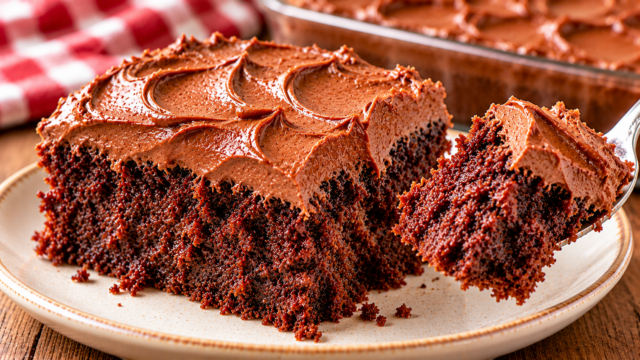
Chocolate Sauerkraut Cake is an old-fashioned dessert with a surprising secret ingredient that makes every bite incredibly moist, rich, and tender. Finely chopped sauerkraut disappears into a deep chocolate cake, adding moisture and a delicate texture without making the dessert taste like cabbage.
The result is a soft, fudgy chocolate cake with a beautifully dark crumb, topped with thick swirls of creamy homemade chocolate frosting. It’s the kind of unusual family recipe that sounds almost impossible until you taste it.
This nostalgic cake dates back to an era when home bakers found clever ways to turn everyday pantry ingredients into something special. The sauerkraut works much like shredded zucchini or carrots in baked goods, helping keep the cake moist while the cocoa powder, vanilla, and butter provide plenty of rich chocolate flavor.
Best of all, this easy dessert bakes in a single 9×13-inch pan, making it perfect for potlucks, Sunday dinners, birthdays, and family gatherings. Serve a thick square with a generous layer of chocolate frosting, and let everyone guess the secret ingredient before revealing what makes this cake so delicious.
Prep Time: 25 minutes
Cook Time: 35 minutes
Cooling Time: 1 hour 30 minutes
Total Time: 2 hours 30 minutes
Servings: 12
Yield: 1 (9×13-inch) cake
Ingredients
For the Chocolate Sauerkraut Cake
- 2 cups all-purpose flour, spooned and leveled
- 3/4 cup unsweetened natural cocoa powder
- 1 1/2 teaspoons baking powder
- 1 teaspoon baking soda
- 1/2 teaspoon salt
- 3/4 cup unsalted butter, softened to room temperature
- 1 3/4 cups granulated sugar
- 3 large eggs, at room temperature
- 2 teaspoons pure vanilla extract
- 1 cup whole milk, at room temperature
- 1 cup sauerkraut, thoroughly rinsed, drained, squeezed dry, and finely chopped
For the Chocolate Buttercream Frosting
- 3/4 cup unsalted butter, softened to room temperature
- 2/3 cup unsweetened cocoa powder
- 3 cups powdered sugar, sifted
- 1/4 cup heavy cream, plus more as needed
- 2 teaspoons pure vanilla extract
- 1/4 teaspoon salt
Directions
- Preheat the oven: Preheat your oven to 350°F. Lightly grease a 9×13-inch baking pan with butter or nonstick cooking spray. For easier removal and cleaner slices, line the pan with parchment paper, leaving a little overhang on two sides.
- Prepare the sauerkraut: Place the sauerkraut in a fine-mesh strainer and rinse thoroughly under cold running water to remove the excess brine and salt. Drain well, then transfer it to a clean kitchen towel or several layers of paper towels. Squeeze firmly to remove as much moisture as possible.
- Chop the sauerkraut: Transfer the drained sauerkraut to a cutting board and chop it very finely with a sharp knife. The pieces should be approximately 1/4 inch long or smaller. This helps the sauerkraut blend into the chocolate cake without leaving noticeable strands. Measure 1 cup after rinsing, squeezing, and chopping.
- Combine the dry ingredients: In a medium mixing bowl, whisk together the all-purpose flour, cocoa powder, baking powder, baking soda, and salt until evenly combined. Break up any large lumps of cocoa powder so the dry mixture is smooth.
- Cream the butter and sugar: In a large mixing bowl, beat the softened butter and granulated sugar with an electric mixer on medium speed for approximately 3 to 4 minutes, until the mixture becomes lighter in color and fluffy. Scrape down the sides of the bowl as needed.
- Add the eggs: Add the eggs one at a time, beating well after each addition. Continue mixing until the eggs are fully incorporated and the batter looks smooth. Add the vanilla extract and mix for another 20 to 30 seconds.
- Combine the wet and dry ingredients: Reduce the mixer speed to low. Add approximately one-third of the flour mixture to the butter mixture, followed by half of the milk. Mix briefly until just combined. Repeat with another third of the flour mixture and the remaining milk, then finish with the last third of the flour mixture. Stop mixing as soon as no dry streaks remain.
- Fold in the sauerkraut: Add the finely chopped sauerkraut to the chocolate batter. Using a rubber spatula, gently fold it into the mixture until evenly distributed. Make sure there are no large clumps of sauerkraut remaining in the batter.
- Fill the baking pan: Pour the chocolate batter into the prepared 9×13-inch baking pan. Spread it evenly with an offset spatula or the back of a spoon, making sure the batter reaches all four corners.
- Bake the cake: Place the pan on the center rack of the preheated oven. Bake for approximately 30 to 35 minutes, or until the top springs back lightly when touched and a toothpick inserted into the center comes out clean or with a few moist crumbs attached. Avoid overbaking, which can dry out the cake.
- Cool completely: Remove the cake from the oven and place the pan on a wire cooling rack. Allow the cake to cool completely for approximately 1 hour 30 minutes before frosting. The cake should feel cool to the touch so the buttercream does not melt when spread over the surface.
- Prepare the chocolate frosting: Place the softened butter in a large mixing bowl. Beat with an electric mixer on medium speed for approximately 2 minutes until smooth and creamy. Add the cocoa powder and beat on low speed until fully incorporated.
- Add the powdered sugar: Gradually add the sifted powdered sugar, approximately 1 cup at a time, alternating with small amounts of the heavy cream. Beat on low speed after each addition to prevent the sugar from scattering. Continue until all the powdered sugar has been incorporated.
- Finish the buttercream: Add the vanilla extract and salt. Increase the mixer speed to medium-high and beat for 2 to 3 minutes until the frosting becomes thick, smooth, and fluffy. If the frosting is too stiff to spread easily, add additional heavy cream 1 teaspoon at a time. If it becomes too soft, beat in a little more powdered sugar.
- Frost the cake: Once the cake is completely cool, spoon the chocolate buttercream over the surface. Use an offset spatula or the back of a large spoon to spread the frosting evenly from edge to edge. Create generous swirls and soft ridges across the top for an old-fashioned homemade appearance.
- Allow the frosting to settle: Let the frosted cake stand at room temperature for approximately 15 minutes before slicing. This allows the frosting to settle slightly and makes it easier to cut clean portions.
- Slice and serve: Cut Chocolate Sauerkraut Cake into 12 generous squares. Serve each piece on a dessert plate with the thick chocolate frosting facing upward. For the best flavor and texture, allow refrigerated cake to come closer to room temperature before serving.
Chefs Notes
- Why sauerkraut works in chocolate cake: Sauerkraut adds moisture and texture to the batter, much like shredded zucchini or carrots. When thoroughly rinsed and finely chopped, its flavor becomes very subtle beneath the cocoa, sugar, and vanilla.
- Rinse the sauerkraut thoroughly: This is one of the most important steps in the recipe. Rinsing removes excess salt and acidity, preventing the sauerkraut from overpowering the chocolate flavor.
- Squeeze out the moisture: Sauerkraut contains a considerable amount of liquid. Squeezing it dry helps prevent the cake batter from becoming too wet or developing a gummy texture.
- Chop it very finely: Small pieces distribute more evenly throughout the batter and become less noticeable in the finished cake. A few quick pulses in a food processor can also work, but avoid pureeing the sauerkraut into a paste.
- Use plain sauerkraut: Choose traditional sauerkraut made primarily from cabbage and salt. Avoid varieties containing caraway seeds, garlic, onions, or other strong seasonings that could affect the dessert’s flavor.
- Use natural cocoa powder: This recipe is formulated for unsweetened natural cocoa powder. Dutch-process cocoa has different acidity and may affect how the baking soda reacts, so natural cocoa is the more reliable choice.
- Measure the flour correctly: Spoon the flour into the measuring cup and level it with a straight edge. Scooping directly from the flour container can pack too much flour into the cup and produce a dense cake.
- Use room-temperature ingredients: Softened butter, room-temperature eggs, and milk blend together more evenly and help produce a smoother batter with a tender crumb.
- Don’t overmix the batter: Once the flour has been added, mix only until the ingredients are combined. Excessive mixing can develop too much gluten and make the cake tough.
- For a richer chocolate flavor: Add 1 teaspoon of instant espresso powder to the dry ingredients. It enhances the chocolate flavor without making the cake taste noticeably like coffee.
- For a darker chocolate frosting: Replace 2 tablespoons of the regular cocoa powder in the frosting with Dutch-process dark cocoa powder. This gives the buttercream a deeper color and richer chocolate appearance.
- Don’t overbake: Begin checking the cake at approximately 30 minutes. A few moist crumbs on the toothpick are perfectly acceptable. The cake will continue setting slightly as it cools.
- Make it ahead: The cake can be baked one day before serving. Once completely cool, cover it tightly and store at room temperature overnight. Frost the following day for the freshest presentation.
- For clean slices: Use a large, sharp knife and wipe the blade clean between cuts. Chilling the frosted cake for approximately 15 to 20 minutes before slicing can help create neater frosting edges.
- Presentation suggestion: Serve a thick square of Chocolate Sauerkraut Cake on a simple ivory-colored dessert plate. The dark, moist chocolate crumb and generous layer of swirled chocolate frosting provide all the visual appeal needed. No additional garnish is necessary.
- Storage: Store the frosted cake in an airtight container in the refrigerator for up to 4 days. Allow individual slices to stand at room temperature for approximately 20 to 30 minutes before serving so the buttercream softens.
- Freezing: Unfrosted cake can be wrapped tightly in plastic wrap and aluminum foil, then frozen for up to 3 months. Thaw overnight in the refrigerator before frosting. Individual frosted slices can also be frozen in airtight containers.
- Serving tip: This cake pairs especially well with cold milk, hot coffee, or a scoop of vanilla ice cream. The contrast between the rich chocolate frosting and cold vanilla ice cream makes it an especially satisfying dessert.
- The surprise factor: For a fun family gathering or potluck, serve the cake without revealing the unusual ingredient. Let guests enjoy a slice and try to guess what makes it so moist before sharing the secret.