
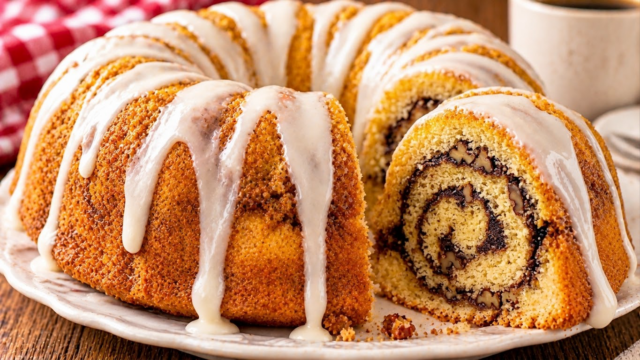
Bundt Coffee Cake with Vanilla Icing is a soft, buttery, old-fashioned cake filled with warm cinnamon, brown sugar, and a delicious ribbon of crunchy pecans. Baked in a Bundt pan until golden brown, this homemade coffee cake has a tender sour cream crumb that stays wonderfully moist for days.
A thick cinnamon sugar swirl runs through the center, while a generous drizzle of sweet vanilla icing flows down the ridges of the cake. Every slice reveals beautiful layers of golden vanilla cake and rich cinnamon filling, making it just as impressive to serve as it is delicious to eat.
This easy Bundt coffee cake is perfect for Sunday mornings, holiday breakfasts, afternoon coffee breaks, or a simple dessert after dinner. The batter comes together with familiar pantry ingredients, and the sour cream gives the cake its rich, bakery-style texture without making it heavy.
There’s no yeast, kneading, or complicated decorating involved. Simply layer the batter with the cinnamon pecan filling, bake until golden, and finish with a thick vanilla icing once the cake has cooled. Serve a generous slice with a hot cup of coffee or cold milk for a comforting homemade treat that tastes like something straight from Grandma’s kitchen.
Prep Time: 20 minutes
Cook Time: 50 to 60 minutes
Cooling Time: 1 hour
Total Time: 2 hours 10 minutes to 2 hours 20 minutes
Servings: 12
Yield: 1 (10-inch) Bundt cake
Ingredients
For the Coffee Cake
- 3 cups all-purpose flour
- 2 teaspoons baking powder
- 1/2 teaspoon baking soda
- 1/2 teaspoon salt
- 1 cup unsalted butter, softened to room temperature
- 1 3/4 cups granulated sugar
- 4 large eggs, at room temperature
- 1 tablespoon pure vanilla extract
- 1 1/4 cups full-fat sour cream, at room temperature
- 1/4 cup whole milk, at room temperature
For the Cinnamon Pecan Swirl
- 3/4 cup packed light brown sugar
- 2 tablespoons ground cinnamon
- 3/4 cup finely chopped pecans
- 2 tablespoons all-purpose flour
- 2 tablespoons unsalted butter, melted
For the Vanilla Icing
- 1 1/2 cups powdered sugar, sifted
- 2 tablespoons whole milk, plus more as needed
- 1 tablespoon unsalted butter, melted and slightly cooled
- 1 1/2 teaspoons pure vanilla extract
- 1 small pinch of salt
Directions
- Preheat the oven: Preheat your oven to 350°F. Position an oven rack in the lower-middle portion of the oven so the Bundt pan has enough room for the cake to rise evenly.
- Prepare the Bundt pan: Generously grease a 10-inch, 12-cup Bundt pan with softened butter or baking spray containing flour. Make sure to coat every ridge, the center tube, and the bottom of the pan. If using butter, lightly dust the pan with flour and tap out the excess.
- Prepare the cinnamon pecan filling: In a medium bowl, combine the brown sugar, ground cinnamon, chopped pecans, and 2 tablespoons of flour. Stir until evenly mixed. Add the melted butter and toss with a fork until the mixture resembles damp, coarse crumbs. Set aside.
- Combine the dry ingredients: In a separate mixing bowl, whisk together the 3 cups of all-purpose flour, baking powder, baking soda, and salt. Whisk for approximately 30 seconds to distribute the leavening ingredients evenly throughout the flour.
- Cream the butter and sugar: In a large mixing bowl, beat the softened butter and granulated sugar with an electric mixer on medium-high speed for approximately 3 to 4 minutes, until the mixture becomes pale, light, and fluffy. Scrape down the sides of the bowl as needed.
- Add the eggs: Add the eggs one at a time, beating on medium speed after each addition until incorporated. Scrape down the bowl between additions to ensure the batter mixes evenly.
- Add the vanilla: Pour in the vanilla extract and beat briefly until combined. The batter should appear thick, smooth, and creamy.
- Combine the sour cream and milk: In a small bowl or measuring cup, stir together the sour cream and whole milk until smooth. This makes the sour cream easier to distribute throughout the cake batter.
- Alternate the wet and dry ingredients: With the mixer on low speed, add approximately one-third of the flour mixture to the butter mixture and mix just until combined. Add half of the sour cream mixture and mix briefly. Repeat with another third of the flour, the remaining sour cream mixture, and finally the remaining flour.
- Finish the batter: Stop mixing as soon as the flour disappears. Use a rubber spatula to gently fold the batter a few times, scraping the bottom and sides of the bowl. The finished batter should be thick, smooth, and spreadable. Avoid overmixing, which can make the cake dense.
- Add the first batter layer: Spoon approximately one-third of the cake batter into the prepared Bundt pan. Use the back of a spoon or a small offset spatula to spread it evenly around the bottom of the pan.
- Add the first cinnamon layer: Sprinkle approximately half of the cinnamon pecan mixture evenly over the batter. Keep the filling slightly away from the outer edges and center tube of the pan to help prevent the sugar mixture from sticking during baking.
- Add the second batter layer: Carefully spoon another third of the cake batter over the cinnamon filling. Spread gently with a spatula, taking care not to disturb the layer underneath.
- Add the remaining cinnamon filling: Sprinkle the remaining cinnamon pecan mixture evenly over the second batter layer. Again, keep the mixture slightly away from the sides of the pan.
- Finish with the remaining batter: Spoon the final third of the cake batter over the cinnamon filling. Gently smooth the surface with a spatula so the batter is evenly distributed around the Bundt pan.
- Create a subtle swirl: Insert a butter knife approximately 1 inch into the batter and make one gentle circular pass around the pan. Avoid excessive swirling, which can blend the cinnamon filling into the batter rather than leaving distinct ribbons.
- Bake the coffee cake: Place the Bundt pan on the center rack of the preheated oven. Bake for approximately 50 to 60 minutes, until the top is golden brown and a wooden skewer inserted into the thickest cake portion comes out clean or with a few moist crumbs. Avoid testing directly through the cinnamon filling, which may remain slightly sticky.
- Check for browning: If the top of the cake begins browning too quickly before the center is fully baked, loosely cover the pan with aluminum foil during the final 10 to 15 minutes of baking.
- Cool in the pan: Remove the cake from the oven and place the Bundt pan on a wire cooling rack. Allow the cake to rest in the pan for approximately 15 minutes. This gives the cake time to firm up slightly before being removed.
- Invert the cake: Place a large wire rack or serving plate over the top of the Bundt pan. Carefully hold the pan and rack together, then invert them in one smooth motion. Gently lift the Bundt pan away. If the cake does not release immediately, allow it to sit inverted for another minute before carefully removing the pan.
- Cool completely: Allow the coffee cake to cool on the wire rack for approximately 45 minutes to 1 hour, or until it reaches room temperature. The cake should be completely cool before adding the icing so the glaze stays thick and forms attractive white ribbons.
- Prepare the vanilla icing: In a medium mixing bowl, whisk together the sifted powdered sugar, 2 tablespoons of milk, melted butter, vanilla extract, and a small pinch of salt. Continue whisking until the mixture is completely smooth and glossy.
- Adjust the icing consistency: The icing should be thick enough to cling to the cake while still flowing slowly from a spoon. If it is too thick, add additional milk 1 teaspoon at a time. If it becomes too thin, whisk in a little more powdered sugar until the desired consistency is reached.
- Ice the cake: Transfer the cooled coffee cake to a serving platter. Using a spoon or small measuring cup, slowly drizzle the vanilla icing over the top of the Bundt cake, allowing it to flow naturally down the ridges and sides. Apply the icing in several passes to create thick, visible white ribbons.
- Allow the icing to set: Let the iced cake stand at room temperature for approximately 10 to 15 minutes so the icing can firm up slightly. The surface should develop a soft, delicate crust while remaining tender underneath.
- Slice and serve: Using a sharp serrated knife, cut the Bundt Coffee Cake with Vanilla Icing into 12 generous slices. Serve on individual dessert plates, allowing the golden cake, cinnamon pecan swirl, and thick vanilla icing to remain clearly visible.
Chefs Notes
- Why sour cream makes a better coffee cake: Sour cream adds moisture, richness, and a slight tang that balances the sweetness of the cake. Its acidity also reacts with the baking soda to help create a tender crumb.
- Use full-fat sour cream: Full-fat sour cream produces the richest flavor and softest texture. Reduced-fat sour cream can be substituted, but the finished cake may be slightly less tender.
- Greek yogurt substitution: Plain full-fat Greek yogurt can replace the sour cream in equal amounts. The cake will have a slightly tangier flavor but a similarly moist texture.
- Use room-temperature ingredients: Softened butter, room-temperature eggs, sour cream, and milk blend together more evenly. Cold ingredients can cause the batter to appear curdled and may affect the cake’s final texture.
- Don’t overmix the batter: Once the flour is added, mix only until the ingredients are combined. Excessive mixing develops gluten and can produce a tough, dense cake instead of a soft, tender crumb.
- Choose the right Bundt pan: A 10-inch Bundt pan with a capacity of at least 12 cups is recommended. Smaller pans may overflow as the cake rises during baking.
- Grease every ridge: Bundt pans have decorative grooves that can trap cake batter. Thoroughly greasing and flouring the pan helps the finished cake release without breaking.
- Keep the cinnamon filling away from the edges: Brown sugar can caramelize against the hot pan and cause sticking. Leaving a small border of plain cake batter around the filling helps prevent this problem.
- Don’t overdo the swirl: One gentle pass with a butter knife is enough to create an attractive cinnamon ribbon. Too much swirling can make the layers muddy and less visually distinct.
- Toast the pecans: For a deeper nutty flavor, toast the chopped pecans in a 350°F oven for approximately 5 to 7 minutes before adding them to the cinnamon filling. Allow them to cool before mixing with the sugar and butter.
- Make it without nuts: Omit the pecans entirely for a nut-free cinnamon coffee cake. Add 2 additional tablespoons of brown sugar to the filling if desired.
- For extra cinnamon flavor: Add 1/2 teaspoon of ground cinnamon to the cake batter in addition to the cinnamon pecan swirl.
- For a richer vanilla flavor: Use vanilla bean paste in place of the vanilla extract in the icing. The tiny vanilla bean flecks add a bakery-style appearance and deeper vanilla flavor.
- Keep the icing thick: A thick vanilla icing creates attractive white ribbons that contrast beautifully with the golden cake. Add milk gradually rather than all at once to avoid making the icing too thin.
- Cool before icing: Drizzling icing over a warm cake causes it to melt and soak into the surface. For a distinct white glaze that runs down the Bundt ridges, wait until the cake has cooled completely.
- For a cream cheese icing: Beat 2 ounces of softened cream cheese with 1 tablespoon of butter, 1 cup powdered sugar, 1 teaspoon vanilla extract, and enough milk to create a thick, pourable glaze.
- For a maple variation: Replace the vanilla extract in the icing with 1 teaspoon maple extract or 1 tablespoon pure maple syrup. Reduce the milk slightly to maintain the desired consistency.
- For an apple cinnamon version: Fold 1 cup of finely diced, peeled apples into the finished cake batter before layering. The apples add moisture and pair beautifully with the cinnamon pecan filling. The cake may require a few additional minutes of baking.
- Make it ahead: The coffee cake can be baked one day in advance. Allow it to cool completely, then cover tightly and store at room temperature. Add the vanilla icing shortly before serving for the freshest appearance.
- Storage: Store the iced coffee cake in an airtight cake container at room temperature for up to 2 days, or refrigerate for up to 5 days. Allow refrigerated slices to come to room temperature before serving for the softest texture.
- Freezing: For best results, freeze the cake before adding the icing. Wrap the cooled cake tightly in plastic wrap and aluminum foil, then freeze for up to 3 months. Thaw overnight in the refrigerator and bring to room temperature before icing.
- Reheating: Uniced slices can be warmed in the microwave for approximately 10 to 15 seconds. If the cake is already iced, use a shorter heating time to avoid melting the glaze completely.
- Best serving occasions: This coffee cake is ideal for weekend breakfasts, brunch gatherings, holiday mornings, afternoon coffee breaks, potlucks, and casual family desserts.
- Presentation suggestion: Place the finished Bundt coffee cake on a simple ivory cake stand or serving platter. Allow thick white vanilla icing to flow down the golden ridges, leaving some of the cake visible beneath. Cut one generous slice and place it slightly in front of the cake to reveal the tender vanilla crumb and dark cinnamon pecan ribbon. For an especially appetizing presentation, use a fork to pull a soft bite from the slice, showing the moist interior and a little vanilla icing clinging to the top. Avoid unnecessary garnishes so the icing and cinnamon swirl remain the main visual features.