
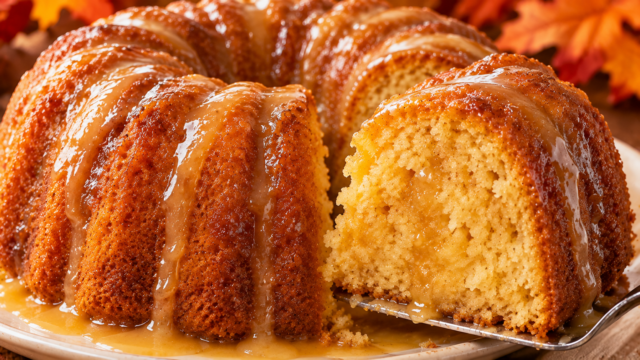
Thanksgiving Butter Bomb Cake is the kind of rich, old-fashioned dessert that has everyone asking for the recipe before dinner is even over. This incredibly moist brown sugar butter cake has a beautifully golden, slightly crisp exterior and a soft, buttery center that practically melts in your mouth.
While the cake is still warm, it’s soaked with a homemade vanilla butter glaze that seeps into every bite, creating irresistible pockets of buttery sweetness. The glaze settles into the golden crust, giving the outside a sticky, caramelized finish while keeping the inside wonderfully tender.
Inspired by classic Southern butter cakes and the homemade desserts that always steal the show at holiday gatherings, this Thanksgiving Butter Bomb Cake turns simple pantry ingredients into something extraordinary. Brown sugar adds a deep caramel flavor, sour cream keeps the crumb soft and moist, and a generous amount of real butter gives the cake its signature richness. It’s easy enough for a beginner, beautiful enough for a Thanksgiving dessert table, and even better the next day after the buttery glaze has had time to soak into the cake. Serve thick slices with coffee, whipped cream, or a scoop of vanilla ice cream for a holiday dessert nobody will forget.
Recipe Information
- Prep Time: 20 minutes
- Cook Time: 55 to 65 minutes
- Cooling and Glazing Time: 1 hour
- Total Time: Approximately 2 hours 20 minutes
- Servings: 12
- Yield: One 10-inch Bundt cake
Ingredients
For the Brown Sugar Butter Cake
- 1 cup (2 sticks) unsalted butter, softened
- 1 cup packed light brown sugar
- 3/4 cup granulated sugar
- 4 large eggs, room temperature
- 2 teaspoons pure vanilla extract
- 2 3/4 cups all-purpose flour
- 2 teaspoons baking powder
- 1/2 teaspoon baking soda
- 1 teaspoon salt
- 1 cup full-fat sour cream, room temperature
- 1/2 cup whole milk, room temperature
- 1/2 teaspoon ground cinnamon, optional
- Butter and flour or baking spray with flour for preparing the pan
For the Vanilla Butter Bomb Glaze
- 3/4 cup (1 1/2 sticks) unsalted butter
- 3/4 cup granulated sugar
- 1/4 cup packed light brown sugar
- 1/4 cup water
- 2 teaspoons pure vanilla extract
- 1/4 teaspoon salt
Optional Finishing Touches
- 2 tablespoons caramel sauce for drizzling
- 1/4 cup chopped toasted pecans
- Vanilla ice cream or freshly whipped cream for serving
Directions
- Preheat the oven: Preheat your oven to 325°F. Generously grease a 10-inch Bundt pan, making sure to coat every ridge and crevice. Dust lightly with flour, tapping out any excess. A baking spray containing flour also works well.
- Combine the dry ingredients: In a medium mixing bowl, whisk together the all-purpose flour, baking powder, baking soda, salt, and optional cinnamon. Set aside.
- Cream the butter and sugars: In a large mixing bowl, beat the softened butter, light brown sugar, and granulated sugar with an electric mixer on medium-high speed for approximately 4 to 5 minutes. The mixture should become noticeably lighter, fluffy, and creamy. Scrape down the sides of the bowl as needed.
- Add the eggs: Add the eggs one at a time, beating well after each addition. This helps create a smooth batter and gives the finished cake a tender, even crumb.
- Add the vanilla: Mix in the vanilla extract until evenly incorporated.
- Combine the wet ingredients: In a separate small bowl, whisk together the sour cream and whole milk until smooth.
- Finish the cake batter: With the mixer on low speed, add the dry ingredients to the butter mixture in three additions, alternating with the sour cream mixture. Begin and end with the dry ingredients. Mix just until combined, being careful not to overmix.
- Fill the Bundt pan: Spoon the thick cake batter evenly into the prepared Bundt pan. Smooth the top with a spatula and gently tap the pan on the counter once or twice to release large air pockets.
- Bake the cake: Place the Bundt pan on the center rack of the preheated oven. Bake for 55 to 65 minutes, or until the cake is deeply golden brown and a wooden toothpick inserted into the thickest portion comes out clean or with a few moist crumbs. If the top begins browning too quickly, loosely cover it with aluminum foil during the final 10 to 15 minutes.
- Prepare the butter glaze: During the final 10 minutes of baking, combine the butter, granulated sugar, brown sugar, water, and salt in a medium saucepan over medium-low heat. Stir frequently until the butter melts and the sugars dissolve.
- Simmer the glaze: Bring the mixture to a gentle simmer and cook for approximately 3 to 4 minutes, stirring occasionally. The glaze should become smooth and slightly syrupy. Do not cook it into a thick caramel, since it needs to remain thin enough to soak into the cake. Remove from the heat and stir in the vanilla extract.
- Poke the warm cake: Remove the finished cake from the oven and place the Bundt pan on a wire rack. Allow it to cool for approximately 10 minutes. While the cake is still warm and inside the pan, use a wooden skewer to poke approximately 25 to 35 holes across the exposed surface, reaching about halfway into the cake.
- Add the first layer of glaze: Slowly spoon approximately two-thirds of the warm butter glaze over the exposed surface of the cake. Work gradually, allowing the glaze to soak into the holes before adding more. If the glaze begins pooling, wait a minute or two before continuing.
- Let the cake absorb the glaze: Allow the cake to rest in the pan for another 15 to 20 minutes. The warm cake will absorb the buttery syrup, creating an exceptionally moist interior.
- Unmold the cake: Carefully loosen the edges of the cake with a thin, flexible spatula if needed. Place a serving plate over the Bundt pan and gently invert it. Lift the pan away slowly to reveal the golden cake.
- Finish with butter glaze: If the remaining glaze has thickened, warm it gently over low heat until pourable. Slowly brush or spoon the remaining glaze over the top and sides of the cake, allowing it to run into the ridges and down the edges.
- Cool before slicing: Allow the cake to rest for at least 25 to 30 minutes after unmolding so the glaze can settle and the crumb can firm up. The exterior should develop a glossy, lightly sticky finish.
- Serve: Cut the cake into 12 generous slices. For an extra-indulgent Thanksgiving dessert, drizzle with a little warm caramel sauce and sprinkle with toasted pecans if desired. Serve slightly warm or at room temperature with vanilla ice cream or whipped cream.
Chefs Notes
The Secret Is the Butter Glaze
What makes Thanksgiving Butter Bomb Cake so special is the generous amount of warm butter glaze poured over the cake while it’s still in the pan. The glaze travels through the small holes and soaks into the soft crumb, creating rich, buttery pockets throughout. Be patient and add the glaze gradually so the cake has time to absorb it without becoming overly saturated in one area.
Use Real Butter
Real unsalted butter is essential for the best flavor. Margarine and butter substitutes contain different amounts of water and fat, which can affect both the texture of the cake and the consistency of the glaze. European-style butter can be used for an especially rich flavor.
Don’t Skip the Sour Cream
Full-fat sour cream gives the cake its exceptionally moist, tender texture. The slight tanginess also balances the sweetness of the brown sugar and butter glaze. Plain full-fat Greek yogurt can be substituted in equal amounts, although the finished texture may be slightly different.
Make It Extra Gooey
For an even richer dessert, serve each slice slightly warm with a spoonful of additional caramel sauce. The combination of warm buttery cake, caramel, and cold vanilla ice cream creates a wonderful contrast of temperatures and textures.
Try a Butter Pecan Variation
For a Southern-inspired twist, fold 3/4 cup of finely chopped toasted pecans into the cake batter just before baking. You can also sprinkle additional toasted pecans over the finished glaze for a nutty crunch that pairs beautifully with the brown sugar flavor.
Make It Ahead for Thanksgiving
This cake is an excellent make-ahead holiday dessert because the butter glaze continues to flavor and moisten the cake as it rests. Prepare the cake one day before Thanksgiving, allow it to cool completely, and store it tightly covered at room temperature. The next day, the flavors will be even more developed and the crumb beautifully moist.
Prevent the Cake From Sticking
Bundt cakes can stick if the pan isn’t thoroughly prepared. Use a generous coating of baking spray containing flour, or grease every crevice with softened butter and dust with flour. Allow the baked cake to cool briefly before glazing, and follow the resting instructions before unmolding. Avoid leaving it in the pan until completely cold.
How to Tell When It’s Done
The cake should have a deep golden exterior and a firm but springy surface. A toothpick inserted into the thickest portion should come out clean or with a few moist crumbs. Avoid overbaking, since the cake will continue to firm slightly as it cools.
Storage Instructions
Store the completely cooled cake tightly covered at room temperature for up to 2 days, or refrigerate for up to 5 days. If refrigerated, allow slices to come to room temperature before serving for the best buttery texture.
Freezer Instructions
Thanksgiving Butter Bomb Cake can be frozen for up to 2 months for best quality. Wrap completely cooled slices individually in plastic wrap, then place them in a freezer-safe container. Thaw overnight in the refrigerator or at room temperature while wrapped. Warm individual slices briefly in the microwave if desired.
Serving Suggestions
This rich butter cake is delicious on its own, but it becomes an especially memorable Thanksgiving dessert when served with vanilla bean ice cream, lightly sweetened whipped cream, or warm caramel sauce. A cup of freshly brewed coffee helps balance the sweetness beautifully.