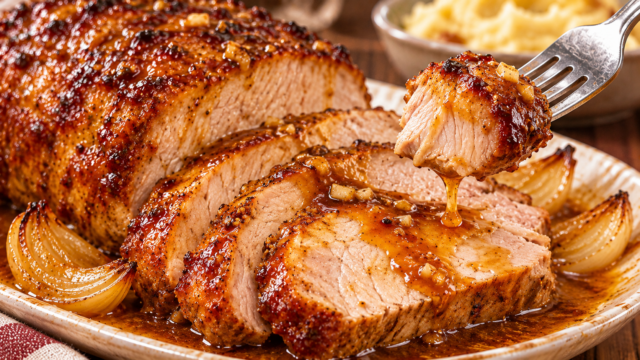
Thanksgiving Roast is a tender, juicy pork loin covered in a sticky brown sugar, Dijon mustard, and garlic glaze that caramelizes into a beautiful golden-brown crust. Every thick slice is packed with savory flavor, with just enough sweetness to make the roasted edges irresistible.
As the pork cooks, the buttery glaze mingles with the natural pan juices, creating a rich sauce that tastes incredible spooned over the meat. It’s the kind of holiday centerpiece that looks impressive on the table but requires surprisingly little work in the kitchen.
If you’re looking for something different from traditional Thanksgiving turkey, this easy glazed pork roast is a delicious alternative. The combination of brown sugar, mustard, garlic, and apple cider vinegar gives the meat a sweet and tangy flavor that pairs beautifully with mashed potatoes, stuffing, roasted carrots, and green bean casserole.
Best of all, the roast develops a gorgeous caramelized exterior while staying moist and tender inside. Whether you’re hosting Thanksgiving dinner, preparing a Sunday supper, or feeding a hungry family, Thanksgiving Roast is a comforting, crowd-pleasing recipe that deserves a place at the table.
Recipe Information
- Prep Time: 20 minutes
- Cook Time: 60 to 80 minutes
- Resting Time: 15 minutes
- Total Time: Approximately 1 hour 55 minutes
- Servings: 8
- Yield: One 3 to 4-pound pork loin roast
Ingredients
For the Pork Roast
- 1 boneless pork loin roast, approximately 3 to 4 pounds
- 2 tablespoons olive oil
- 1 1/2 teaspoons kosher salt
- 1 teaspoon freshly ground black pepper
- 1 teaspoon smoked paprika
- 1 teaspoon garlic powder
- 1 teaspoon onion powder
- 1/2 teaspoon dried thyme
- 1/2 teaspoon dried rosemary, crushed
For the Brown Sugar Garlic Glaze
- 1/2 cup packed light brown sugar
- 1/4 cup Dijon mustard
- 3 tablespoons unsalted butter
- 4 cloves garlic, minced
- 2 tablespoons apple cider vinegar
- 1 tablespoon Worcestershire sauce
- 1 tablespoon honey
- 1/2 teaspoon smoked paprika
- 1/4 teaspoon crushed red pepper flakes, optional
For the Buttery Pan Sauce
- 1 cup low-sodium chicken broth
- 1 medium yellow onion, thickly sliced
- 2 tablespoons unsalted butter
- 1 teaspoon Dijon mustard
- 1 teaspoon apple cider vinegar
- 1 teaspoon cornstarch mixed with 1 tablespoon cold water, optional, for thickening
Directions
- Preheat the oven: Preheat your oven to 350°F. Position an oven rack in the center. Lightly grease a large roasting pan or oven-safe baking dish.
- Prepare the pork: Remove the pork loin roast from its packaging and pat it completely dry with paper towels. Trim away any excess surface fat, leaving a thin layer to help keep the meat moist during roasting. If the roast has a fat cap, position it facing upward when roasting.
- Season the roast: In a small bowl, combine the kosher salt, black pepper, smoked paprika, garlic powder, onion powder, dried thyme, and crushed rosemary. Rub the pork loin with olive oil, then coat it evenly with the seasoning mixture, pressing the spices gently into the surface.
- Sear the pork: Heat a large, heavy skillet over medium-high heat. Add the seasoned pork loin and sear for approximately 2 to 3 minutes per side, turning carefully, until the outside develops a golden-brown crust. This step adds flavor and color to the finished roast.
- Prepare the roasting pan: Scatter the thickly sliced onions across the bottom of the prepared roasting pan. Pour in the chicken broth. Place the seared pork loin on top of the onions, fat side up if applicable. The onions will help flavor the pan juices as the roast cooks.
- Begin roasting: Place the pork in the preheated oven and roast uncovered for approximately 25 to 35 minutes while preparing the glaze. The pork will continue cooking after the glaze is added.
- Make the brown sugar garlic glaze: In a small saucepan over medium-low heat, melt the 3 tablespoons of butter. Add the minced garlic and cook for approximately 30 seconds until fragrant. Stir in the brown sugar, Dijon mustard, apple cider vinegar, Worcestershire sauce, honey, smoked paprika, and optional red pepper flakes.
- Simmer the glaze: Cook the glaze over medium-low heat for approximately 2 to 3 minutes, stirring constantly, until the sugar dissolves and the mixture becomes smooth, glossy, and slightly thickened. Remove from the heat. Divide the glaze into two portions, reserving one portion for later basting so it remains uncontaminated by raw or undercooked meat.
- Glaze the roast: Remove the pork from the oven and brush the top and sides generously with the first portion of the warm brown sugar glaze. Return the roast to the oven.
- Continue roasting: Roast for another 20 to 35 minutes, depending on the thickness of the pork loin. During the final 15 minutes, brush the roast with the reserved clean glaze in two applications, allowing the surface to develop a sticky, caramelized coating. Watch carefully because the brown sugar can darken quickly.
- Check the internal temperature: Insert an instant-read meat thermometer into the thickest part of the pork loin, avoiding any large pockets of fat. The roast is ready when the center reaches 145°F. Total cooking time will vary depending on the roast’s size, shape, and starting temperature, so rely on the thermometer rather than time alone.
- Optional caramelized finish: If the pork has reached 145°F but the glaze needs more color, briefly place it under the broiler for approximately 30 to 60 seconds, watching continuously. Skip this step if the glaze is already deeply browned.
- Rest the roast: Transfer the pork loin to a cutting board and loosely tent it with aluminum foil. Allow it to rest for at least 15 minutes before slicing. Resting helps the juices redistribute throughout the meat and keeps the slices moist.
- Prepare the buttery pan sauce: While the pork rests, pour the roasting pan juices and softened onions into a small saucepan. Skim off excess fat if necessary. Add 2 tablespoons of butter, 1 teaspoon of Dijon mustard, and 1 teaspoon of apple cider vinegar. Bring to a gentle simmer over medium heat.
- Thicken the sauce if desired: For a slightly thicker pan sauce, stir together 1 teaspoon of cornstarch and 1 tablespoon of cold water. Whisk the mixture into the simmering sauce and cook for approximately 1 minute until lightly thickened. Taste and adjust the seasoning as needed.
- Slice the pork: Using a sharp carving knife, slice the rested pork loin across the grain into thick slices approximately 1/2 inch wide. Arrange the slices on a serving platter, slightly overlapping them to showcase the golden, caramelized exterior and juicy interior.
- Finish and serve: Spoon some of the warm buttery pan sauce over the sliced pork, allowing it to run between the slices. Serve the remaining sauce on the side. Pair with mashed potatoes, stuffing, roasted vegetables, or your favorite Thanksgiving side dishes.
Chefs Notes
Choose Pork Loin, Not Pork Tenderloin
This recipe is designed for a boneless pork loin roast weighing approximately 3 to 4 pounds. Pork loin is a larger, thicker cut that works beautifully for holiday roasting and produces generous slices for serving. Pork tenderloin is much smaller and cooks considerably faster, so it should not be substituted without adjusting the cooking method and timing.
The Secret to a Sticky Caramelized Glaze
The combination of brown sugar, Dijon mustard, honey, and butter creates the signature glossy crust on Thanksgiving Roast. Applying the glaze in stages allows it to build layers of flavor without burning. For the best results, brush the pork generously during the latter portion of roasting rather than coating it heavily at the beginning.
Don’t Overcook the Pork
One of the most important steps is removing the pork from the oven when the thickest part reaches 145°F. Pork loin is relatively lean and can become dry if cooked too long. A digital meat thermometer takes the guesswork out of roasting and helps produce juicy, tender slices. Allow the meat to rest for at least 3 minutes for food safety; the recommended 15-minute rest also improves slicing.
Make the Glaze More Savory
If you prefer a less sweet roast, reduce the brown sugar to 1/3 cup and omit the honey. Increase the Dijon mustard by an additional tablespoon for a tangier, more savory glaze. A little extra black pepper also balances the sweetness beautifully.
Try an Apple Cider Variation
For a more autumn-inspired flavor, replace 1/2 cup of the chicken broth in the roasting pan with unsweetened apple cider. The cider combines with the onions and pork juices to create a subtly sweet pan sauce that pairs especially well with Thanksgiving stuffing and roasted sweet potatoes.
Add Extra Garlic Flavor
For garlic lovers, increase the minced garlic in the glaze to 6 cloves. You can also scatter several whole garlic cloves around the pork during roasting. They will soften in the pan juices and add a mellow roasted garlic flavor to the finished sauce.
Make-Ahead Instructions
The dry seasoning mixture and brown sugar glaze can be prepared up to 2 days in advance. Store the glaze in an airtight container in the refrigerator and gently reheat it before using. The pork can be seasoned and refrigerated overnight, covered, to allow the flavors to develop. For the best texture, roast the pork shortly before serving.
How to Keep the Roast Juicy
Use a meat thermometer, avoid excessive cooking time, and allow the pork to rest before slicing. Keeping a small amount of broth in the roasting pan also helps prevent the pan drippings from burning. If the pan becomes dry during cooking, add another splash of warm broth around the roast without washing away the glaze.
Storage Instructions
Store leftover pork in an airtight container in the refrigerator for up to 3 to 4 days. Keep some of the pan sauce with the sliced meat to help maintain moisture. Reheat gently in a covered baking dish at 300°F with a splash of broth until thoroughly heated to 165°F.
Freezing Instructions
Cooked Thanksgiving Roast can be frozen for up to 2 months for best quality. Slice the completely cooled pork and place portions in freezer-safe containers with a little pan sauce. Thaw overnight in the refrigerator and reheat gently to avoid drying out the meat.
Serving Suggestions
Thanksgiving Roast is especially delicious with creamy mashed potatoes, cornbread dressing, green bean casserole, roasted Brussels sprouts, glazed carrots, or sweet potato casserole. For a traditional Southern holiday dinner, serve it alongside warm dinner rolls and finish the meal with pecan pie or pumpkin cake.