
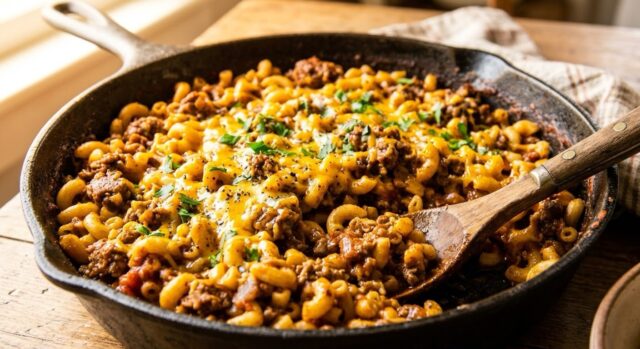
Dirty Mama Macaroni is a hearty, old-fashioned skillet dinner loaded with tender elbow macaroni, seasoned ground beef, sweet onions, and a rich, savory tomato sauce.
Everything gets tossed together with a generous handful of sharp cheddar cheese, creating a creamy, slightly cheesy coating that clings to every piece of pasta. A splash of Worcestershire sauce, garlic, and a little smoked paprika give the dish its deep, homemade flavor, while the browned beef and tomatoes make every bite satisfying. It’s the kind of comforting, stick-to-your-ribs supper that tastes like something Mama would have thrown together on a busy weeknight.
This easy one-pot macaroni dinner combines the familiar flavors of American goulash, homemade hamburger macaroni, and cheesy beef pasta into one inexpensive family meal. There’s no complicated preparation, no oven required, and hardly any cleanup.
The macaroni cooks right in the seasoned tomato and beef sauce, soaking up all those delicious flavors before the cheese gets stirred in at the end. Dirty Mama Macaroni is perfect for feeding a hungry family, stretching a pound of ground beef, or making a big skillet of comfort food when you don’t feel like spending all evening in the kitchen.
Prep Time: 10 minutes
Cook Time: 30 minutes
Total Time: 40 minutes
Servings: 6
Yield: Approximately 8 cups
Ingredients
For the Dirty Mama Macaroni
- 1 pound ground beef, preferably 85/15
- 1 tablespoon olive oil, if needed
- 1 medium yellow onion, finely diced
- 3 cloves garlic, minced
- 1 teaspoon kosher salt, or to taste
- 1/2 teaspoon freshly ground black pepper
- 1 teaspoon smoked paprika
- 1 teaspoon Italian seasoning
- 1 tablespoon Worcestershire sauce
- 2 tablespoons tomato paste
- 1 (15-ounce) can tomato sauce
- 1 (14.5-ounce) can diced tomatoes, undrained
- 2 1/2 cups low-sodium beef broth
- 2 cups uncooked elbow macaroni, approximately 8 ounces
- 1 teaspoon granulated sugar, optional
- 1 1/2 cups freshly shredded sharp cheddar cheese
- 2 tablespoons unsalted butter
For Serving
- Additional shredded sharp cheddar cheese, optional
- Freshly ground black pepper, to taste
Directions
- Prepare the ingredients: Dice the onion, mince the garlic, and measure out the remaining ingredients before beginning. Shred the cheddar cheese from a block for the smoothest melting texture. Keep the macaroni uncooked because it will cook directly in the skillet with the beef and tomato sauce.
- Brown the ground beef: Place a large, deep skillet or Dutch oven over medium-high heat. Add the ground beef and cook for approximately 6 to 8 minutes, breaking it into small crumbles with a wooden spoon as it browns. Continue cooking until the beef is no longer pink and develops some deeply browned bits for extra flavor.
- Drain excess grease: If the ground beef releases a large amount of fat, carefully drain off the excess, leaving approximately 1 tablespoon in the skillet. If the beef is particularly lean and the skillet appears dry, add 1 tablespoon of olive oil.
- Cook the onion: Add the diced yellow onion to the browned beef. Reduce the heat to medium and cook for approximately 4 to 5 minutes, stirring occasionally, until the onion softens and becomes slightly translucent.
- Add the garlic: Stir the minced garlic into the beef and onion mixture. Cook for approximately 30 to 60 seconds, stirring constantly, until fragrant. Avoid letting the garlic brown too much, as it can develop a bitter flavor.
- Season the beef: Sprinkle the kosher salt, black pepper, smoked paprika, and Italian seasoning over the meat mixture. Add the Worcestershire sauce and stir thoroughly so the beef and onions are evenly coated with the seasonings.
- Cook the tomato paste: Add the tomato paste directly to the skillet. Stir it into the beef mixture and cook for approximately 1 to 2 minutes, allowing the tomato paste to darken slightly. This step deepens the tomato flavor and gives the finished macaroni a richer, more savory sauce.
- Add the tomatoes: Pour in the tomato sauce and the entire can of diced tomatoes, including their juices. Stir well, scraping the bottom of the skillet to loosen any browned bits left from cooking the beef.
- Add the broth: Pour the beef broth into the skillet and stir until the sauce is evenly combined. Add the optional teaspoon of sugar if the tomatoes taste particularly acidic. The sugar should balance the acidity rather than make the sauce noticeably sweet.
- Bring to a simmer: Increase the heat to medium-high and bring the beef and tomato mixture to a gentle boil. Stir occasionally to prevent the sauce from sticking to the bottom of the skillet.
- Add the macaroni: Stir the uncooked elbow macaroni directly into the simmering sauce. Make sure the pasta is mostly submerged in the liquid so it can cook evenly. If necessary, add an additional splash of broth or water to help cover the macaroni.
- Cook the pasta: Reduce the heat to medium-low, cover the skillet, and simmer for approximately 10 to 13 minutes, stirring every 2 to 3 minutes. The macaroni should become tender while absorbing the seasoned tomato sauce. Cooking time may vary depending on the brand and size of the pasta.
- Adjust the consistency: Once the macaroni is nearly tender, remove the lid and check the sauce. If the mixture appears too thick before the pasta is fully cooked, add 1/4 cup of warm water or beef broth at a time. If the sauce is too thin, simmer uncovered for another 2 to 3 minutes, stirring frequently, until some of the liquid evaporates.
- Add the butter: When the macaroni is tender, reduce the heat to low and stir in the unsalted butter. Allow it to melt completely into the tomato sauce, giving the mixture a richer flavor and smoother texture.
- Stir in the cheese: Remove the skillet from the heat. Add the shredded sharp cheddar cheese in three additions, stirring gently after each addition until the cheese melts into the hot macaroni. The sauce should become creamy and lightly cheesy while still allowing the beef and tomatoes to remain visible.
- Let the macaroni rest: Allow Dirty Mama Macaroni to stand uncovered for approximately 3 minutes before serving. This gives the sauce a chance to thicken slightly and cling more evenly to the pasta.
- Taste and adjust: Taste the finished macaroni and add additional salt or freshly ground black pepper if needed. If the mixture has thickened more than desired, stir in a small splash of warm broth to loosen the sauce.
- Serve: Spoon generous portions of Dirty Mama Macaroni into shallow bowls or onto dinner plates. For an extra cheesy finish, sprinkle a small amount of shredded cheddar over the hot macaroni and allow it to melt naturally. Serve immediately while the pasta is hot, tender, and coated in the rich beef and tomato sauce.
Chefs Notes
- Why it’s called Dirty Mama Macaroni: The name comes from the hearty mixture of browned ground beef, tomatoes, onions, and seasonings that coats the macaroni in a rich, rustic sauce. It’s a playful name for a simple, old-fashioned skillet supper.
- Use a deep skillet: A large 12-inch skillet with high sides or a 5-quart Dutch oven works best. The pan needs enough room for the beef, sauce, broth, and uncooked macaroni without overflowing during simmering.
- Brown the beef thoroughly: Allowing the ground beef to develop some darker browned edges creates a deeper savory flavor. Avoid stirring constantly during the first few minutes so the meat has a chance to caramelize against the hot skillet.
- Choose the right ground beef: Ground beef labeled 85/15 provides a good balance of flavor and moisture. Leaner ground beef can also be used, but you may need a little olive oil when cooking the onions.
- Why the macaroni cooks in the sauce: Cooking the pasta directly in the tomato and beef broth mixture allows it to absorb the savory flavors. The starch released by the macaroni also helps thicken the sauce naturally.
- Stir frequently: Pasta can settle against the bottom of the skillet as it cooks. Stirring every few minutes helps prevent sticking and ensures the macaroni cooks evenly.
- Adjust the liquid as needed: Different pasta brands absorb slightly different amounts of liquid. If the macaroni is still firm but the sauce has become thick, add warm broth or water in small amounts until the pasta finishes cooking.
- Don’t overcook the macaroni: Remove the skillet from the heat when the pasta is just tender. The macaroni will continue absorbing some liquid as the dish rests, so overcooking can make it excessively soft.
- Use freshly shredded cheddar: Cheese shredded from a block generally melts more smoothly than packaged shredded cheese, which often contains anti-caking ingredients. Sharp cheddar provides a stronger flavor without requiring a large amount.
- Add the cheese off the heat: Stirring cheddar into very hot, actively boiling sauce can cause the cheese to separate and become grainy. Removing the skillet from the heat before adding the cheese helps create a smoother coating.
- Keep the cheese balanced: Dirty Mama Macaroni should be a hearty beef and tomato pasta with a creamy cheddar finish, rather than a skillet of macaroni swimming in melted cheese. The ground beef, tomatoes, and elbow macaroni should remain clearly visible.
- For a spicier version: Add 1/4 teaspoon cayenne pepper, 1/2 teaspoon crushed red pepper flakes, or a few dashes of hot sauce when seasoning the beef.
- For a smoky variation: Replace half of the ground beef with finely chopped smoked sausage. Brown the sausage with the beef to create a deeper, smoky flavor.
- Ground turkey substitution: Ground turkey can be used instead of ground beef. Add 1 tablespoon of olive oil when browning the meat and consider using chicken broth in place of beef broth.
- Try different pasta shapes: Small shells, rotini, or short penne can be substituted for elbow macaroni. Adjust the cooking time and liquid as necessary because larger pasta shapes may take longer to become tender.
- For extra vegetables: Add 1/2 cup finely diced bell pepper with the onion or stir in 1 cup of frozen peas during the final few minutes of cooking. These additions make the dish more colorful without changing its basic flavor.
- For a creamier sauce: Stir in 2 tablespoons of softened cream cheese along with the butter before adding the cheddar. This creates a slightly richer texture without making the dish overly heavy.
- For a more traditional American goulash flavor: Omit the cheddar cheese and add 1 teaspoon of sweet paprika. The result will be closer to a classic tomato-based ground beef and macaroni skillet.
- Make it ahead: Dirty Mama Macaroni can be prepared several hours before serving, although the pasta will continue absorbing sauce as it sits. When reheating, add a splash of broth or water to restore the desired consistency.
- Best side dishes: Serve with warm garlic bread, buttered dinner rolls, a simple green salad, roasted broccoli, or steamed green beans. Because the macaroni is already a complete, hearty meal, simple sides work best.
- Storage: Allow leftovers to cool slightly, then transfer them to shallow airtight containers and refrigerate within 2 hours of cooking. Store for up to 3 to 4 days.
- Freezing: Dirty Mama Macaroni can be frozen in airtight, freezer-safe containers for up to 2 months for the best quality. The pasta may become softer after thawing. For the best texture, thaw overnight in the refrigerator before reheating.
- Reheating: Place leftover macaroni in a saucepan or skillet over medium-low heat. Add 2 to 3 tablespoons of water or beef broth per serving and stir gently until heated through to 165°F. Individual portions can also be reheated in the microwave, stirring halfway through.
- Presentation suggestion: Serve Dirty Mama Macaroni in a rustic skillet or shallow ivory bowl, with the browned beef, red tomato pieces, and golden macaroni clearly visible. For an especially appetizing presentation, use a large wooden spoon to lift a generous portion above the skillet, showing the rich sauce clinging to the pasta and a few short, natural strands of melted cheddar. Avoid excessive cheese, unnecessary garnishes, or decorative herbs that hide the main ingredients.