
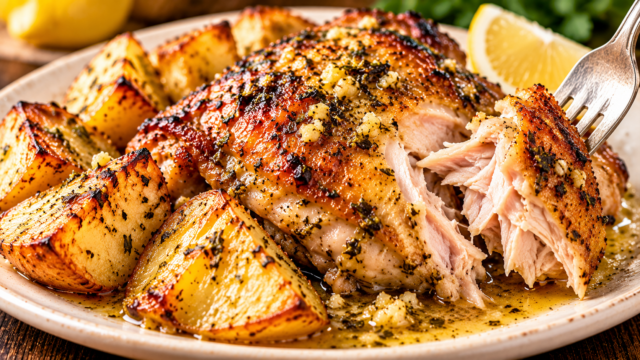
Greek God Chicken is a delicious Mediterranean-inspired dinner featuring juicy, golden roasted chicken thighs and tender potatoes coated in a bold lemon garlic sauce.
The chicken develops beautifully crispy skin while the potatoes soak up the rich flavors of olive oil, fresh lemon juice, garlic, oregano, and rosemary. Everything roasts together in one pan, creating a mouthwatering combination of crispy edges, savory herbs, and bright citrus flavor.
A simple pan sauce made from the roasting juices brings everything together, making every bite incredibly flavorful.
This easy Greek-style chicken dinner is perfect for busy weeknights, Sunday suppers, or feeding a hungry family without spending hours in the kitchen. With just a handful of everyday ingredients and one roasting pan, Greek God Chicken delivers the kind of comforting, homemade meal that tastes like something from a traditional Greek kitchen.
The potatoes become golden and slightly crispy on the outside while staying soft and fluffy inside, and the chicken remains wonderfully tender beneath its seasoned skin. Serve everything straight from the roasting pan with a generous spoonful of the lemony garlic juices for a simple dinner that everyone will want again.
Prep Time: 10 minutes
Cook Time: 50 minutes
Total Time: 1 hour
Servings: 4
Yield: 4 generous servings
Ingredients
For the Chicken and Potatoes
- 4 pounds bone-in, skin-on chicken thighs
- 3 medium russet potatoes, peeled and cut into quarters
- 1/2 cup freshly squeezed lemon juice, approximately 3 to 4 lemons
- 1/2 cup extra virgin olive oil, preferably Greek olive oil
- 6 cloves garlic, finely minced
- 1 tablespoon dried oregano
- 1 tablespoon kosher salt, or to taste
- 1 teaspoon dried rosemary
- 1 teaspoon freshly ground black pepper
- 1 pinch cayenne pepper, optional
- 1 cup low-sodium chicken broth, divided
For Serving
- 1 teaspoon chopped fresh oregano, optional
- Fresh lemon wedges, optional
- Additional pan juices, for spooning over the chicken and potatoes
Directions
- Preheat the oven: Preheat your oven to 425°F. Position an oven rack in the center of the oven. Lightly grease a large roasting pan or a deep, rimmed baking dish with a small amount of olive oil to prevent sticking.
- Prepare the chicken: Remove the chicken thighs from their packaging and pat them dry with paper towels. Trim away any large pieces of excess fat or loose skin, but leave the skin intact to help the chicken become golden and crispy during roasting.
- Prepare the potatoes: Peel the russet potatoes and cut each one into four large, evenly sized pieces. Keeping the potato pieces similar in size helps them cook evenly and prevents smaller pieces from becoming overly soft before the chicken is finished.
- Make the lemon garlic marinade: In a large mixing bowl, combine the freshly squeezed lemon juice, olive oil, minced garlic, dried oregano, kosher salt, dried rosemary, black pepper, and optional cayenne pepper. Whisk until the ingredients are evenly mixed.
- Coat the chicken and potatoes: Add the chicken thighs and quartered potatoes to the bowl with the lemon garlic mixture. Toss thoroughly using clean hands or large kitchen tongs until every piece is evenly coated with the seasoned oil and lemon juice.
- Arrange the roasting pan: Transfer the chicken thighs to the prepared roasting pan, placing them skin-side up in a single layer. Arrange the potato quarters around and between the chicken pieces, leaving enough room for the heat to circulate. Avoid stacking the potatoes directly on top of the chicken.
- Add the roasting liquid: Pour 2/3 cup of the chicken broth around the chicken and potatoes. Spoon any remaining lemon garlic marinade from the mixing bowl over the ingredients, making sure the potatoes receive plenty of the seasoned liquid. The broth should collect in the bottom of the pan rather than cover the chicken skin.
- Begin roasting: Place the roasting pan on the center rack of the preheated oven. Roast uncovered for approximately 20 minutes. During this time, the chicken will begin browning and the potatoes will start absorbing the lemon garlic juices.
- Turn the potatoes: Carefully remove the pan from the oven. Using kitchen tongs, turn the potato pieces so they become coated in the flavorful pan juices. If necessary, gently move the chicken thighs to redistribute the potatoes, then return each chicken piece to a skin-side-up position.
- Continue roasting: Return the pan to the oven and roast for another 25 to 30 minutes, or until the chicken skin is deeply golden and the potatoes are tender when pierced with a fork. Cooking time may vary depending on the size of the chicken thighs and potato pieces.
- Check the chicken temperature: Insert an instant-read meat thermometer into the thickest part of a chicken thigh without touching the bone. The chicken must reach an internal temperature of at least 165°F. For especially tender dark meat, an internal temperature of approximately 175°F to 185°F is also suitable.
- Remove the cooked chicken: Once the chicken is fully cooked, carefully transfer the thighs to a warm serving platter. Cover loosely with aluminum foil to keep them warm while you finish the potatoes. Leave the potatoes and roasting juices in the pan.
- Crisp the potatoes: Turn the oven to broil. Toss the potatoes gently in the remaining lemon garlic pan juices, then spread them into a single layer. Place the roasting pan under the broiler for approximately 2 to 4 minutes, watching carefully, until the potato edges become golden brown and lightly crisp.
- Transfer the potatoes: Remove the roasting pan from the oven and transfer the crispy potatoes to the serving platter alongside the chicken thighs. Keep the roasting pan and its flavorful cooking juices for the sauce.
- Prepare the pan sauce: If the roasting pan is safe for stovetop use, place it over medium heat. Otherwise, transfer the pan juices to a small saucepan. Add the remaining 1/3 cup chicken broth and bring to a gentle simmer.
- Release the browned bits: Using a wooden spoon, scrape the bottom of the pan to loosen the browned garlic, herbs, and roasted chicken drippings. Stir for approximately 1 to 2 minutes, allowing the broth to absorb the concentrated flavors.
- Strain the sauce: Pour the pan juices through a fine-mesh strainer into a heatproof measuring cup or small bowl. Press lightly on the solids to extract additional flavor, then discard the strained solids. Taste the sauce and adjust the seasoning if necessary.
- Finish the dish: Spoon the warm lemon garlic pan sauce over the roasted chicken thighs and potatoes. Use enough sauce to coat the potatoes and add moisture to the chicken without completely covering the crispy skin.
- Serve: Sprinkle with a small amount of freshly chopped oregano if desired and serve with fresh lemon wedges on the side. Enjoy Greek God Chicken immediately while the chicken skin is crispy, the potatoes are golden, and the lemon garlic sauce is warm.
Chefs Notes
- Why bone-in chicken thighs work best: Bone-in, skin-on chicken thighs stay juicy during high-temperature roasting and develop a flavorful, crispy exterior. The rendered chicken fat also enriches the potatoes and pan sauce.
- Use fresh lemon juice: Freshly squeezed lemon juice provides the brightest citrus flavor. Bottled lemon juice can taste harsher and may lack the fresh aroma that makes this dish especially appealing.
- Greek olive oil adds flavor: A good-quality extra virgin olive oil contributes a rich, slightly fruity flavor that complements the lemon, garlic, and oregano. Any good extra virgin olive oil can be used if Greek olive oil is unavailable.
- Choose the right potatoes: Russet potatoes become soft and fluffy inside while developing lightly crispy edges. Yukon Gold potatoes are another excellent option and produce a creamier interior.
- Cut the potatoes evenly: Large, evenly sized potato quarters work best because they can roast alongside the chicken without falling apart. Smaller potato pieces may cook too quickly and become overly soft.
- Don’t overcrowd the pan: Arrange the chicken and potatoes in a single layer with a little space between the pieces. Overcrowding traps steam and can prevent the chicken skin and potatoes from browning properly.
- Keep the chicken skin facing upward: Leaving the skin exposed during roasting allows it to become golden and crisp. Avoid submerging the chicken skin in broth or covering it with potatoes.
- Use low-sodium chicken broth: The seasoning mixture already contains a generous amount of salt. Low-sodium broth provides savory flavor without making the finished sauce excessively salty.
- Adjust the salt: One tablespoon of kosher salt seasons the full quantity of chicken and potatoes, but kosher salt brands vary in density. If using fine table salt, begin with approximately 1 1/2 teaspoons and adjust to taste.
- For extra crispy chicken skin: Pat the chicken thoroughly dry before coating it with the lemon garlic mixture. If the skin needs additional browning after the meat is cooked, briefly broil the chicken separately for 1 to 2 minutes, watching closely to prevent burning.
- Don’t skip the potato broiling step: The potatoes absorb moisture while roasting in the lemon garlic broth. A brief finish under the broiler helps develop golden, crispy edges without drying out the centers.
- Use a broiler-safe pan: Before placing the roasting pan under the broiler, confirm that it is rated for broiler use. Glass baking dishes and some coated pans may not tolerate direct high heat.
- For a stronger lemon flavor: Add 1 teaspoon of finely grated lemon zest to the marinade. Lemon zest provides additional citrus aroma without increasing the acidity of the sauce.
- For a milder lemon flavor: Reduce the lemon juice to 1/3 cup and increase the chicken broth slightly. The finished dish will remain flavorful but have a gentler citrus tang.
- For extra garlic flavor: Add 2 additional minced garlic cloves to the marinade. For a sweeter roasted garlic flavor, tuck a few whole peeled garlic cloves between the potatoes before roasting.
- For a spicy variation: Increase the cayenne pepper to 1/4 teaspoon or add a small pinch of crushed red pepper flakes to the lemon garlic marinade.
- Use dried oregano for authentic flavor: Dried oregano provides a concentrated herbal flavor that holds up well during roasting. Greek oregano is especially fragrant, but standard dried oregano works well.
- Fresh oregano is optional: A small amount of fresh oregano can add color and aroma before serving, but the dish is flavorful without additional garnish.
- Boneless chicken substitution: Boneless chicken thighs can be used, but they cook more quickly than bone-in thighs. Roast the potatoes separately for approximately 15 minutes before adding the boneless chicken, then continue roasting until the chicken reaches at least 165°F.
- Chicken breast substitution: Bone-in, skin-on chicken breasts can be used, although they may require a different cooking time depending on their size. Use an instant-read thermometer and remove the breasts when they reach 165°F to avoid drying them out.
- Make it ahead: The lemon garlic seasoning mixture can be prepared up to 24 hours in advance and refrigerated in a covered container. For the best texture, cut the potatoes and combine everything shortly before roasting.
- Best side dishes: Greek God Chicken pairs well with a simple cucumber and tomato salad, warm pita bread, steamed green beans, roasted asparagus, or a light Greek-style rice pilaf.
- Storage: Refrigerate leftover chicken and potatoes in shallow, airtight containers within 2 hours of cooking. Store for up to 3 to 4 days. Keep any extra pan sauce in a separate covered container.
- Freezing: Cooked chicken can be frozen in a freezer-safe container for up to 3 months for the best quality. The roasted potatoes can also be frozen, although their texture may become softer after thawing.
- Reheating: Arrange leftover chicken and potatoes in a baking dish and add a small splash of chicken broth. Reheat in a 350°F oven until the chicken reaches 165°F. For crispier skin, uncover the dish during the final few minutes of reheating.
- Presentation suggestion: Serve Greek God Chicken on a rustic ivory platter with two deeply golden chicken thighs surrounded by roasted potato wedges. Allow the glossy lemon garlic sauce to collect naturally around the potatoes while keeping the crispy chicken skin visible. For an especially appetizing presentation, use a fork to pull away a juicy piece of chicken, revealing the tender interior beneath the browned, herb-seasoned skin. Keep the background simple and avoid unnecessary decorative garnishes.